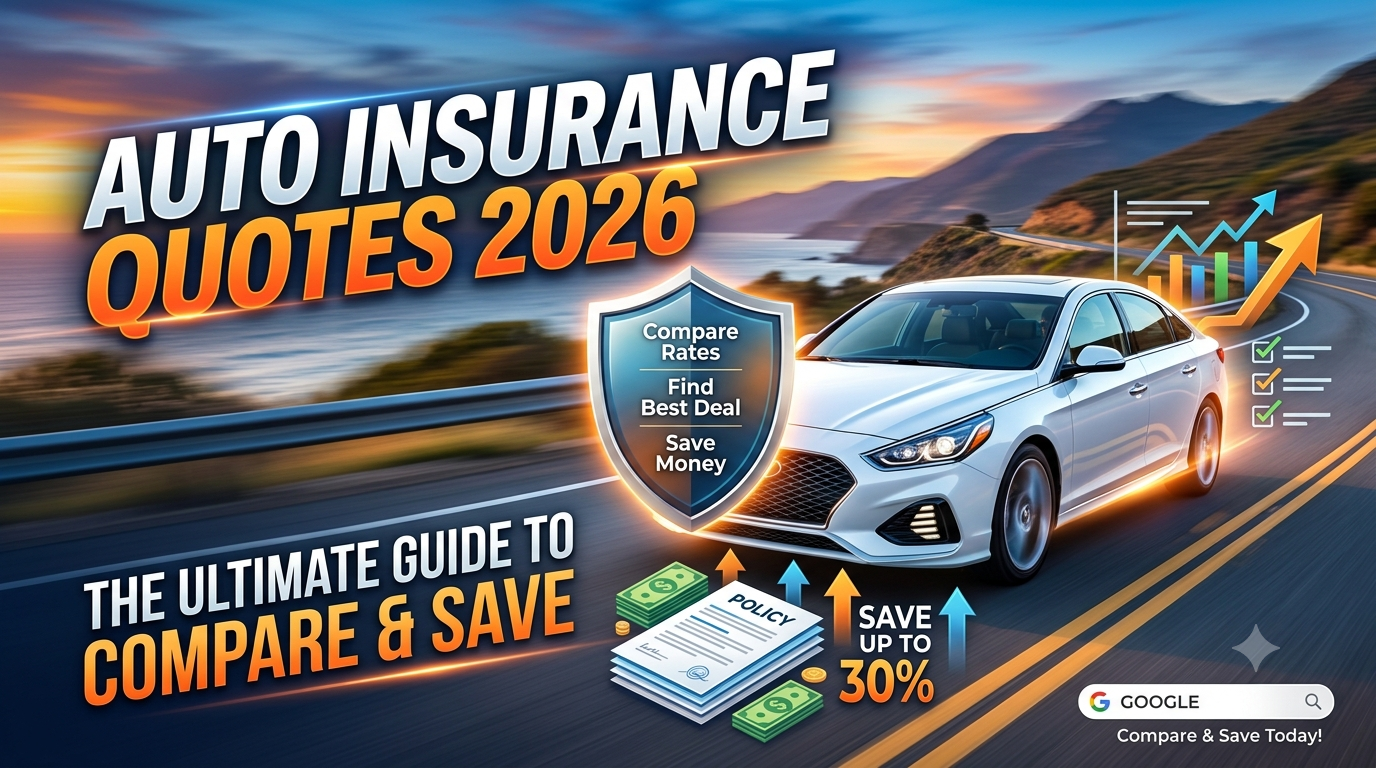
The Ultimate Guide to Auto Insurance Quotes: How to Find the Best Rates in 2026
Finding the right auto insurance policy can feel like navigating a maze. With so many providers, coverage options, and add-ons available, how do you know you are getting the best deal? The secret lies in understanding how auto insurance quotes work and learning how to compare them effectively.
Whether you are buying your first car, renewing an existing policy, or simply looking to lower your monthly premiums, this comprehensive guide will walk you through everything you need to know about getting and comparing auto insurance quotes online.
What Are Auto Insurance Quotes?
An auto insurance quote is an estimate provided by an insurance company detailing how much you will pay for a specific car insurance policy. It is not a binding contract; rather, it is a calculation based on the information you provide about yourself, your vehicle, and the type of coverage you want.
When you request a quote, the insurer assesses your risk profile. If they determine that you are a safe driver with a reliable car, your quoted premium will be lower. Conversely, if you have a history of accidents or drive a high-end sports car, your quote will reflect that higher risk.
Why Comparing Auto Insurance Quotes is Essential
Many drivers make the mistake of auto-renewing their insurance with the same company year after year. While loyalty is great, it can often cost you money. Insurance companies constantly adjust their pricing models, meaning the company that offered you the best rate three years ago might not be the cheapest option today.
Comparing quotes from multiple providers offers several benefits:
- Cost Savings: Prices for the exact same coverage can vary wildly between companies. Comparing quotes ensures you aren’t leaving money on the table.
- Better Coverage: You might find that for the same price you are paying now, another company offers higher coverage limits or free add-ons like roadside assistance.
- Leverage: If you find a cheaper quote elsewhere, you can sometimes ask your current provider to match it.
Key Factors That Affect Your Auto Insurance Quotes
Insurance companies use complex algorithms to determine your premium. While the exact formula varies by provider, they all look at three main categories: personal factors, vehicle factors, and policy factors.
1. Personal Factors
- Driving History: A clean driving record free of accidents and traffic violations is the best way to secure low quotes. Even a single speeding ticket can increase your premium.
- Age and Gender: Statistically, young drivers (especially teenagers) are involved in more accidents, so they face higher rates. Rates generally drop as you enter your mid-20s.
- Location: If you live in a densely populated urban area with high rates of traffic and theft, you will pay more than someone living in a quiet rural town.
- Credit Score: In many regions, insurers use a credit-based insurance score to predict the likelihood of a claim. Higher credit scores usually lead to lower premiums.
2. Vehicle Factors
- Make and Model: Luxury vehicles and sports cars cost more to repair and replace, leading to higher insurance quotes. Family sedans and minivans with high safety ratings usually command lower rates.
- Age of the Vehicle: As a car ages, its market value (or Insured Declared Value – IDV) depreciates. A lower IDV means a lower premium for comprehensive coverage.
- Safety Features: Cars equipped with anti-theft devices, advanced airbags, and collision-avoidance systems (like ADAS) often qualify for premium discounts.
3. Policy Factors
- Coverage Limits: Choosing higher payout limits for liability and property damage will increase your quote.
- Deductibles: Your deductible is the amount you pay out-of-pocket before insurance kicks in. Choosing a higher deductible (e.g., $1,000 instead of $500) will lower your monthly premium, but requires you to have more cash on hand in an emergency.
Types of Auto Insurance Coverage Explained
When reviewing your quotes, it is crucial to understand what you are actually paying for. Here are the primary types of auto insurance coverage:
| Coverage Type | What It Covers | Is It Mandatory? |
| Third-Party Liability | Pays for damages and injuries you cause to others in an accident. | Yes, legally required in almost all regions. |
| Collision Coverage | Pays to repair or replace your car after an accident, regardless of who is at fault. | Optional (but usually required if you have a car loan). |
| Comprehensive Coverage | Covers damage to your car from non-collision events (theft, fire, vandalism, natural disasters). | Optional (but highly recommended). |
| Personal Injury Protection (PIP) | Covers medical expenses and lost wages for you and your passengers after an accident. | Varies by region (mandatory in “no-fault” states). |
| Uninsured Motorist | Protects you if you are hit by a driver who does not have insurance or flees the scene. | Varies by region. |
Expert Tip: For maximum financial protection, opt for a Comprehensive Policy that bundles Third-Party, Collision, and Comprehensive coverage together.
How to Get Auto Insurance Quotes Online: A Step-by-Step Guide
Gone are the days of calling multiple insurance agents on the phone. Today, getting auto insurance quotes online is fast, free, and incredibly easy.
1.Gather Your Information:Have your documents ready.
Before you start, collect your driver’s license, vehicle registration (Make, Model, VIN), and your current insurance declarations page. Having these on hand ensures your quotes are accurate.
2.Determine Your Coverage Needs:Don’t just look at the price.
Decide how much liability coverage you need and what deductible you can afford. If you are buying an older car, you might want to drop collision coverage to save money.
3.Use an Online Comparison Tool:Save time.
Visit an insurance aggregator website. These platforms allow you to enter your details once and receive quotes from 5 to 10 different insurers simultaneously.
4.Compare Apples to Apples:Check the fine print.
Ensure that every quote you look at offers the exact same coverage limits and deductibles. A quote might look cheap simply because it offers bare-minimum legal coverage.
5.Check the Insurer’s Reputation:Look beyond the premium.
Once you narrow down the cheapest quotes, research the companies. Check their Claim Settlement Ratio (CSR) and read customer reviews to ensure they actually pay out when you need them to.
6.Finalize and Buy Online:Instant coverage.
Once you have selected the best quote, you can usually finalize the purchase online, pay via credit card or digital wallet, and receive your digital policy documents instantly.
Must-Have Add-Ons to Consider
When generating a quote, you will be offered various “add-ons” or “riders.” While they increase your premium slightly, they can save you thousands of dollars in the long run.
- Zero Depreciation Cover (Bumper-to-Bumper): Normally, insurers deduct the depreciation value of your car’s parts before settling a claim. This add-on ensures you get the full replacement cost for parts without factoring in depreciation. Excellent for cars under 5 years old.
- Roadside Assistance (RSA): Provides 24/7 help if you get a flat tire, run out of gas, or need a tow.
- Return to Invoice (RTI): If your car is stolen or totaled, standard insurance only pays the current market value. RTI ensures you get the exact amount you originally paid for the car (the invoice price).
- Engine Protection: Covers engine damage caused by water logging or oil leaks, which are usually excluded from standard policies.
Pro Tips to Lower Your Auto Insurance Premium
If the quotes you are seeing are too high, try these strategies to bring the cost down:
- Ask for Discounts: Insurers offer dozens of discounts that they don’t always advertise. Ask about discounts for safe driving, bundling home and auto insurance, being a good student, or paying your annual premium in full upfront.
- Increase Your Deductible: Moving your deductible from $500 to $1,000 can slash your premium by 15% to 20%.
- Protect Your No Claim Bonus (NCB): If you don’t file a claim for a year, insurers reward you with a discount on your next renewal (often starting at 20% and growing up to 50% over five years). Pay out-of-pocket for minor scratches to protect this massive discount.
- Install Anti-Theft Devices: An ARAI-approved anti-theft alarm or GPS tracker makes your car harder to steal, reducing the insurer’s risk and your premium.
Frequently Asked Questions (FAQs)
Does checking auto insurance quotes affect my credit score?
No. When an insurance company checks your credit to generate a quote, it counts as a “soft pull.” This does not impact your credit score, regardless of how many quotes you request.
How often should I shop for new car insurance quotes?
You should compare quotes at least once a year, ideally a month before your current policy is set to renew. You should also check quotes after major life events, such as moving to a new ZIP code, buying a new car, or getting married.
Why is my car insurance quote higher than my friend’s?
Because insurance is highly personalized. Even if you drive the exact same car, your friend might have a longer driving history, a better credit score, or live in a neighborhood with a lower crime rate.
What is an Insured Declared Value (IDV)?
The IDV is the maximum amount the insurer will pay you in case of a total loss (total damage or theft). It represents the current market value of your vehicle. A higher IDV means a higher premium, but better financial protection if the worst happens.
Conclusion
Finding the best auto insurance doesn’t have to be a headache. By understanding the factors that influence pricing, knowing the difference between coverage types, and using online comparison tools, you can secure robust protection without overpaying. Remember: the cheapest quote isn’t always the best policy. Balance affordability with a high Claim Settlement Ratio and excellent customer service to ensure you are truly covered when you hit the road.